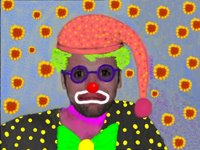
Dear Reader
You may be interested, and perhaps even excited, to learn that I have completed installation of my Winter 2006 Art Exhibition at http://mcrumbleart.blogspot.com
Please take some time to peruse these works, which have been specially selected by myself and my good friend Bernadette Saupin, a wonderful artist who has given me much encouragement over the years to realise myself as a prominent artist. In the near future I may well make them available as limited edition signed prints. Please email me if you would be interested in owning a piece of McCrumble art. Of course, comments are always welcome. These may be left using the comments link at the bottom of the exhibition page.
yours truly
Joseph McCrumble
Artist in Residence
Cumbernauld Institute of Parasitology
Sunday, January 22, 2006
Saturday, January 21, 2006
A Never Ending Shame - Part II
NOTE: Please read 'A never ending shame Part I' before this post' Otherwise what is described below won’t make the slightest bit of sense, I promise.
------
It was a race against time. Within a week several mysterious deaths occurred amongst the wild rabbit population. One fear was that the parasite or its eggs was being picked up in sheep faeces by rabbits. It was thought inevitable that the local dog population would become infected, and that the infection would therefore spread back to humans with potentially disastrous consequences. Fortunately, I was in the area and could offer my services. I had recently developed a new medicinal compound based on liquorice, nettle leaves and the juice of a Paraguayan species of rhododendron which I had collected on a recent trip to South America. I had a hunch it may be effective against this particular worm (I have to admit now it was a total shot in the dark). I told the local mayor that my compounnd might prove effective, but that, as a responsible scientist, I needed to conduct further field trials. I tried it on some stray dogs but they simply vomited irrespective of dose or preparation. It was Denise (my faithul receptionist) who then suggested rabbits. They seemed to be a key host for the parasite. I told the mayor I needed some rabbits, but his rabbit catcher was on holiday in the Azores so he offered me his daughter’s pet flop-eared rabbit instead. At first I declined, but the mayor reminded me that I owed him a favour (the details are not important), and so I took the animal into my care.
The next day I handed the rabbit back in good health, with the pronouncement that the compound was seemingly well tolerated. I did not say that the drug was a vaccine, nor that it would actually cure the infection. In no time at all though, young girls and their mothers were lining up outside the laboratory to have their rabbit 'vaccinated'. I gave Angus McCavity the duty of keeping them all sweet whilst I worked out how to get hold of something that was actually sick from the parasite.
It didn't take me long. I was out walking in a nearby field when I saw a fox lurching from side to side. It didn't look at all well, and my guess was it had eaten an infected wild rabbit. I went back for some gloves and a lab coat and took the fox back to the lab. I strapped it down on the table and poured some of the thick black liquid down its throat. I waited for a reaction, listening to the gentle bubble of conversation outside and the tiny sounds of ‘thank you sir’ as another pet bunny rabbit was 'vaccinated'.
Twenty minutes later the fox suddenly evacuated its bowels before throwing up, rolling it's eyes and issuing its death rattle. Some little amount of blood seeped from its nostrils.
At that moment I experienced a feeling of panic like never before. I could not breathe, and my heart began to race at such a speed I momentarily thought I might suffer a myocardial infarction. My immediate reaction was to stay rooted to the spot, for fear of what I might see when I left the room. But somehow, and with an enormous strength of will I never knew I possessed, I managed to extricate myself from the armchair and walk outside.
What greeted me was the sight of about a hundred children, accompanied by at least one parent, cuddling their beloved pets. Everybody seemed to be enjoying themselves, and the lilting sounds of happy children filled the summer air.
The feeling of panic began to subside. I was able to ask McCavity how it had gone, and he replied that none of the rabbits had reacted badly. It then struck me that the fox had likely expired from the parasite rather than my medicine. The next thing that struck me was the clenched fist of the mayor, driving hard into the pit of my stomach. He had, unseen by myself, approached from the left. I fell to the ground, winded and groaning with the pain. He, unsympathetic to my predicament, hoisted me up. His whisky-tainted breath and red-eyes suggested to me that he had been drinking heavily, a hunch confirmed when he started talking.
'You f**cking little.....' came out several times, followed by some piece of male or female anatomy. Interspersed with the expletives were statements that led me to believe, as I hung in my lab coat that he kept firmly gripped with one hand, that I was responsible for the death of his daughter's pet rabbit. I was of course mortified, but my scientific training nonetheless caused me to try and explain (in layman’s terms) that the rabbit could have died from a number of competing causes. It was a useless attempt at reason. He would hear nothing of it. He gave me another good punch to the stomach and let me drop. As I hit the ground I heard the sound of a small child crying and wailing to its mother. I couldn't make out everything the child was saying from my prostrated position, as one ear was pressed into the ground, but I did make out some keywords which strung together sounded something like 'Mummy.......stopped breathing....turning blue.....mummy, help him'. At this point I fainted from the pain.
Two days later, every pet rabbit in the town was dead. One hundred and ninety three bunnies (including seven prize winning specimens) were buried in shallow graves in one hundred and thirty back gardens. Two hundred and seventy children entered a period of mourning. Nearly four hundred parents signed a petition demanding that my 'quack's circus' left the town never to return. The mayor told me that if he ever saw my name in print pretending to be a scientist that he would skin me alive. As we left town, crestfallen, the townspeople stood on the side of the road with a look of collective disgust on their faces. Some of them held up pictures of their rabbits.
It was at this point that the Cumbernauld Institute of Parasitology became homeless. I am now forced to move from community to community whenever someone realises that I was responsible for the massacre of the town’s bunnies. Fortunately that doesn't happen too often, and I have been able to keep my mobile suite of laboratories in some fields for several months undetected. In each place I try to uphold my commitment to science, and no-one to this day, if they know the facts, cannot say I am not truthful in my endeavours. It is nonetheless a constant source of shame that I allowed myself to be persuaded by people who understand nothing about my art. It will never happen again.
---
(Footnote: Two weeks after my departure the epidemic subsided. It did not cross into the domestic dog population as feared. Once in sheep, it was shed in their faeces and ingested by other sheep and also, crucially, by rabbits, which were a dead-end host. The original species-jump from man to sheep was eventually revealed to have occurred through the efforts of a mosquito that was in the luggage of the travellers. The mosquito must have bitten the poor father, ingested some eggs that were in his blood, and then bitten one of the sheep, presumably after the mosquito had mated with a local compatible species (only female mosquitoes take a bloodmeal and only once per gonotrophic cycle). Any supposed biblical tryst between poor father and his ungulate companion is therefore totally unfounded, and shame on you for thinking that may have been the case. The lurching fox was a red-herring, as I found no parasite. I think it had just been drinking. Once the wild rabbit population had perished, the parasite had no-where else to go, especially as all the domestic bunnies were already dead, poor wee things).
------
It was a race against time. Within a week several mysterious deaths occurred amongst the wild rabbit population. One fear was that the parasite or its eggs was being picked up in sheep faeces by rabbits. It was thought inevitable that the local dog population would become infected, and that the infection would therefore spread back to humans with potentially disastrous consequences. Fortunately, I was in the area and could offer my services. I had recently developed a new medicinal compound based on liquorice, nettle leaves and the juice of a Paraguayan species of rhododendron which I had collected on a recent trip to South America. I had a hunch it may be effective against this particular worm (I have to admit now it was a total shot in the dark). I told the local mayor that my compounnd might prove effective, but that, as a responsible scientist, I needed to conduct further field trials. I tried it on some stray dogs but they simply vomited irrespective of dose or preparation. It was Denise (my faithul receptionist) who then suggested rabbits. They seemed to be a key host for the parasite. I told the mayor I needed some rabbits, but his rabbit catcher was on holiday in the Azores so he offered me his daughter’s pet flop-eared rabbit instead. At first I declined, but the mayor reminded me that I owed him a favour (the details are not important), and so I took the animal into my care.
The next day I handed the rabbit back in good health, with the pronouncement that the compound was seemingly well tolerated. I did not say that the drug was a vaccine, nor that it would actually cure the infection. In no time at all though, young girls and their mothers were lining up outside the laboratory to have their rabbit 'vaccinated'. I gave Angus McCavity the duty of keeping them all sweet whilst I worked out how to get hold of something that was actually sick from the parasite.
It didn't take me long. I was out walking in a nearby field when I saw a fox lurching from side to side. It didn't look at all well, and my guess was it had eaten an infected wild rabbit. I went back for some gloves and a lab coat and took the fox back to the lab. I strapped it down on the table and poured some of the thick black liquid down its throat. I waited for a reaction, listening to the gentle bubble of conversation outside and the tiny sounds of ‘thank you sir’ as another pet bunny rabbit was 'vaccinated'.
Twenty minutes later the fox suddenly evacuated its bowels before throwing up, rolling it's eyes and issuing its death rattle. Some little amount of blood seeped from its nostrils.
At that moment I experienced a feeling of panic like never before. I could not breathe, and my heart began to race at such a speed I momentarily thought I might suffer a myocardial infarction. My immediate reaction was to stay rooted to the spot, for fear of what I might see when I left the room. But somehow, and with an enormous strength of will I never knew I possessed, I managed to extricate myself from the armchair and walk outside.
What greeted me was the sight of about a hundred children, accompanied by at least one parent, cuddling their beloved pets. Everybody seemed to be enjoying themselves, and the lilting sounds of happy children filled the summer air.
The feeling of panic began to subside. I was able to ask McCavity how it had gone, and he replied that none of the rabbits had reacted badly. It then struck me that the fox had likely expired from the parasite rather than my medicine. The next thing that struck me was the clenched fist of the mayor, driving hard into the pit of my stomach. He had, unseen by myself, approached from the left. I fell to the ground, winded and groaning with the pain. He, unsympathetic to my predicament, hoisted me up. His whisky-tainted breath and red-eyes suggested to me that he had been drinking heavily, a hunch confirmed when he started talking.
'You f**cking little.....' came out several times, followed by some piece of male or female anatomy. Interspersed with the expletives were statements that led me to believe, as I hung in my lab coat that he kept firmly gripped with one hand, that I was responsible for the death of his daughter's pet rabbit. I was of course mortified, but my scientific training nonetheless caused me to try and explain (in layman’s terms) that the rabbit could have died from a number of competing causes. It was a useless attempt at reason. He would hear nothing of it. He gave me another good punch to the stomach and let me drop. As I hit the ground I heard the sound of a small child crying and wailing to its mother. I couldn't make out everything the child was saying from my prostrated position, as one ear was pressed into the ground, but I did make out some keywords which strung together sounded something like 'Mummy.......stopped breathing....turning blue.....mummy, help him'. At this point I fainted from the pain.
Two days later, every pet rabbit in the town was dead. One hundred and ninety three bunnies (including seven prize winning specimens) were buried in shallow graves in one hundred and thirty back gardens. Two hundred and seventy children entered a period of mourning. Nearly four hundred parents signed a petition demanding that my 'quack's circus' left the town never to return. The mayor told me that if he ever saw my name in print pretending to be a scientist that he would skin me alive. As we left town, crestfallen, the townspeople stood on the side of the road with a look of collective disgust on their faces. Some of them held up pictures of their rabbits.
It was at this point that the Cumbernauld Institute of Parasitology became homeless. I am now forced to move from community to community whenever someone realises that I was responsible for the massacre of the town’s bunnies. Fortunately that doesn't happen too often, and I have been able to keep my mobile suite of laboratories in some fields for several months undetected. In each place I try to uphold my commitment to science, and no-one to this day, if they know the facts, cannot say I am not truthful in my endeavours. It is nonetheless a constant source of shame that I allowed myself to be persuaded by people who understand nothing about my art. It will never happen again.
---
(Footnote: Two weeks after my departure the epidemic subsided. It did not cross into the domestic dog population as feared. Once in sheep, it was shed in their faeces and ingested by other sheep and also, crucially, by rabbits, which were a dead-end host. The original species-jump from man to sheep was eventually revealed to have occurred through the efforts of a mosquito that was in the luggage of the travellers. The mosquito must have bitten the poor father, ingested some eggs that were in his blood, and then bitten one of the sheep, presumably after the mosquito had mated with a local compatible species (only female mosquitoes take a bloodmeal and only once per gonotrophic cycle). Any supposed biblical tryst between poor father and his ungulate companion is therefore totally unfounded, and shame on you for thinking that may have been the case. The lurching fox was a red-herring, as I found no parasite. I think it had just been drinking. Once the wild rabbit population had perished, the parasite had no-where else to go, especially as all the domestic bunnies were already dead, poor wee things).
Tuesday, January 17, 2006
A never-ending shame Part I
Dearest reader
In the first post of this blog (Introduction), I alluded to something that altered the way I live my life forever. You may have noticed a few unusual things about me already, particularly the fact that my name will never appear in the parasitological literature. This is because I must publish under a pseudonym, for reasons that I will now explain. Those of you unwilling to hear of a humble parasitologist suffering torment for his attention to detail and scientific rigour should perhaps tune into something more lighthearted.
It all happened about a year ago, when I was called upon to save a remote Scottish community from being wiped out by a mysterious parasitic disease that been brought in from Paraguay by some returning tourists. An adventurous young family had been on a two month hike in the Paraguay jungle, but had returned early when one of their member (poor father) took a bad turn. By the time they landed he was feeling very poorly indeed. They sped from Glasgow airport to the nearest A&E, where he was given some antibiotics and told to lie down. So they drove to their isolated farm (the location has never been revealed to the outside world for fear of reprisals and loss of tourist revenue) and put their father to bed. He seemed stable for the next 24 hours but then suddenly went downhill. His temperature shot up and he rapidly became delirious. Fearing the end was near, his wife summoned their doctor (who lived 15 miles away). But whilst the medic was on his way, the ailing father, now in a state of advanced delirium announced that he was no longer in love with his wife, and wished to see his favourite black-faced sheep, Jemima, before he passed away. Such was his insistence that Jemima was his one true love that the children went to the field and grabbed hold of the first sheep they could find (a sheep of no-name as it happened). They dragged the animal upstairs to their fathers bedroom and tied her to the bed-post. Their father told them, in no uncertain terms, to leave the room, which they did in floods of tears, fearing for the safety of both their father and the sheep. They heard a key turn as they stood on the landing, and moments later the sound of hooves stamping across the wooden floor. They tried to open the door with the handle but couldn't, and neither the children nor the mother could push it open. Eventually the noise subsided and all they could hear was the gentle groans of a dying man.
Soon the doctor arrived, who managed to force the door open (dislocating his shoulder in the process). As the door swung inwards there was an almighty clatter of hooves on the wooden floor and the sheep-with-no-name, sporting a gag and a pair of sunglasses, fled the room, it's eyes revealing nothing but abject panic. Their poor father was lying semi-naked on the floor of the bed, his face contorted and his veins blue. He had quite clearly expired. The children screamed, the mother almost fainted, but the doctor, suspecting something odd may have happend, simply shouted 'CATCH THAT F**KING SHEEP'
By now the sheep-with-no-name had left the house and was tearing back towards the field. The gag fell out and the sunglasses fell off into the muddy ground. The other sheep scattered, scared first by the sight and sounds of one of their own running headlong into them, and then by the sight and sounds of a corpulent middle-aged man huffing, puffing, sweating and swearing for the 'f**king stupid animal' to 'f**king stop'. But almost as soon as it had started, it was all over. The sheep with no name became lost in the scattering herd, and the doctor fell unconscious onto the mud, having run out of breath within fifteen seconds of starting his sprint (not breathing during heavy exercise is not recommended, and the good doctor should have known better).
To cut a long story short, three days later half the herd was dead or dying. The authorities were called in and the herd was culled. Post-mortem analyses revealed aone or more tiny parasitic worms, never before encountered, in the heart of each animal. The worms had been eating away at the walls of the heart, leading to massive disruption of the circulation. The worm was also present in the heart of the poor father, and fear gripped the local community that other people and livestock were at risk......
In the first post of this blog (Introduction), I alluded to something that altered the way I live my life forever. You may have noticed a few unusual things about me already, particularly the fact that my name will never appear in the parasitological literature. This is because I must publish under a pseudonym, for reasons that I will now explain. Those of you unwilling to hear of a humble parasitologist suffering torment for his attention to detail and scientific rigour should perhaps tune into something more lighthearted.
It all happened about a year ago, when I was called upon to save a remote Scottish community from being wiped out by a mysterious parasitic disease that been brought in from Paraguay by some returning tourists. An adventurous young family had been on a two month hike in the Paraguay jungle, but had returned early when one of their member (poor father) took a bad turn. By the time they landed he was feeling very poorly indeed. They sped from Glasgow airport to the nearest A&E, where he was given some antibiotics and told to lie down. So they drove to their isolated farm (the location has never been revealed to the outside world for fear of reprisals and loss of tourist revenue) and put their father to bed. He seemed stable for the next 24 hours but then suddenly went downhill. His temperature shot up and he rapidly became delirious. Fearing the end was near, his wife summoned their doctor (who lived 15 miles away). But whilst the medic was on his way, the ailing father, now in a state of advanced delirium announced that he was no longer in love with his wife, and wished to see his favourite black-faced sheep, Jemima, before he passed away. Such was his insistence that Jemima was his one true love that the children went to the field and grabbed hold of the first sheep they could find (a sheep of no-name as it happened). They dragged the animal upstairs to their fathers bedroom and tied her to the bed-post. Their father told them, in no uncertain terms, to leave the room, which they did in floods of tears, fearing for the safety of both their father and the sheep. They heard a key turn as they stood on the landing, and moments later the sound of hooves stamping across the wooden floor. They tried to open the door with the handle but couldn't, and neither the children nor the mother could push it open. Eventually the noise subsided and all they could hear was the gentle groans of a dying man.
Soon the doctor arrived, who managed to force the door open (dislocating his shoulder in the process). As the door swung inwards there was an almighty clatter of hooves on the wooden floor and the sheep-with-no-name, sporting a gag and a pair of sunglasses, fled the room, it's eyes revealing nothing but abject panic. Their poor father was lying semi-naked on the floor of the bed, his face contorted and his veins blue. He had quite clearly expired. The children screamed, the mother almost fainted, but the doctor, suspecting something odd may have happend, simply shouted 'CATCH THAT F**KING SHEEP'
By now the sheep-with-no-name had left the house and was tearing back towards the field. The gag fell out and the sunglasses fell off into the muddy ground. The other sheep scattered, scared first by the sight and sounds of one of their own running headlong into them, and then by the sight and sounds of a corpulent middle-aged man huffing, puffing, sweating and swearing for the 'f**king stupid animal' to 'f**king stop'. But almost as soon as it had started, it was all over. The sheep with no name became lost in the scattering herd, and the doctor fell unconscious onto the mud, having run out of breath within fifteen seconds of starting his sprint (not breathing during heavy exercise is not recommended, and the good doctor should have known better).
To cut a long story short, three days later half the herd was dead or dying. The authorities were called in and the herd was culled. Post-mortem analyses revealed aone or more tiny parasitic worms, never before encountered, in the heart of each animal. The worms had been eating away at the walls of the heart, leading to massive disruption of the circulation. The worm was also present in the heart of the poor father, and fear gripped the local community that other people and livestock were at risk......
**********TO BE CONTINUED***********
Sunday, January 15, 2006
How to get worms


Readers of this blog may be already wondering whether they are at risk of the nasty parasitic diseases in which I specialise. Well, that depends on a number of factors. There are a few well known risk factors for contracting parasitic infections. Let me give you an example.
In the United Kingdom we are fortunate to have a temperate climate (though this may change in the next few years). The lack of warm moist soils means that the parasite eggs shed into the environment do not easily survive. At least, not the eggs of parasites normally associated with humans. But the eggs of some animal parasites do survive in british soil, and they can and do infect people (GET READY FOR THE YUCKY BIT).
So how does this happen? Well, imagine yourself as an eight year old child, playing football in the local park. It's summer time, and you don't have a care in the world. You kick the ball all over the field, sometimes at the goal, sometimes into the rough, uncut grass beside the pitch. On one such occasion the ball lands on something a bit soft and greasy. You put your hands down to pick up the ball and SQUELCH, your fingers end up covered in sticky, smelly dog poo. Never mind though, because there is plenty of grass around for you to wipe your mucky fingers clean. A minute later, you are kicking the ball around again, almost having forgotten picking the thing up.
But then along comes Toby McDougall, the school bully. You don't like Toby because last week he pushed you over in the playground and pulled ten hairs out of your head as he held you down. You see him running towards the pitch and you start running in the opposite direction, the joy of kicking a ball around immediately extinguished. He is taller and faster than you, and it only takes a few moments for him to catch up. The first thing you feel is a hand in the middle of your back. Then you are on the ground, and he is straddling your back. First he rubs your face on the grass until it hurts, then he takes your fingers and bites one of them! He keeps your finger in his mouth for several seconds, biting harder and harder. Then you let out a scream so piercing that the school bully releases your finger and stands up with a start. You begin to cry uncontrollably, and this proves too much. The bully kicks the grass in your general direction and runs off with your new football.
You cry all the way home because your finger hurts so much, and you tell your mummy about it as she washes and disinfects your dirty, reddened finger. There are teeth marks, but luckily he didn't break the skin.
You are reluctant to go back to school, and anyway a few days later you get a summer cold with some fever, so your mummy lets you stay at home. When you do go back, you find out that the school bully has also been off school with something like a cold. But when he describes his symptoms to his mates it includes a painful tummy, a cough, and he was very sleepy. Then a couple of weeks later the bully complains to his teacher that he can't see properly. Things have gone a bit cloudy. The teacher tells him to go home.
The bully doesn't return for a few days, and the other children want to know what has happened to him. They ask the teacher. She is unwilling at first, but after a few days of persistent questioning she tells the class that Toby has toxocariasis. The children look bemused. What is this funny sounding thing? They want to know more, and this is what the teacher tells them....
'Toxocariasis is something we get from dog poo (uuugh shout the children). Sometimes dogs have a worm in their tummy (uuuuuuuuugh), which lays eggs that come out when the dog goes to the toilet (uuuuuuuuuuugh). If you pick up the dog poo, some of it might stay on your hands even though you don't know it is there (uuuuuugh). The eggs are so small you can't see them. If you put your fingers in your mouth, the eggs might get into your tummy (uuuuuuuugh). The eggs hatch, and a little worm comes out (uuuuuuuuuuuuuugh). It wriggles into your body and starts wandering around inside. This can make you very sick. Sometimes the worm wiggles all the way up into your eye and starts wiggling around inside your eyeball (uuuuuuuuuuuuugh).
Suddenly you are struck by a panic attack, and you blurt out to the teacher what happened the a while ago in the park. You are scared that you too have a worm in your eyeball. The teacher rings your mummy who takes you home from school and straight to your doctor. He does some tests and later on tells your mummy that you don't have any worms at all. Phew. Fortunately, you didn't put your fingers in your own mouth after picking up the poo-covered football, and it was Toby who got infected. So there, Toby McDougall, bullying me was the worst thing you could have done, 'cos I was immune! Ha!
(Footnote: Toby did make a full recovery, but became the laughing stock of the school. Nicknames like 'poo-eater', 'worm-boy' and 'dog-f**ker' were often heard in the school playground. He left primary school a broken bully, and I never saw him again.)
Tuesday, January 10, 2006
Mrs Dr McCrumble
Aah yes, the love of my life. We met over ten years ago at a seminar for youngsters looking to improve their relationships with their parents. Mine were largely absent from the home, both being hard working accountants for a petrochemical firm, hers were both locked up for fraud (something to do with race-horses). I think we simply wanted to know how to get on with life in their absence. Anyways, nothing much came of it except declarations of undying love not three weeks later. It was a sweet, old fashioned romance, and I like to think that our relationship has grown much firmer over the years. Sure, we have had the odd argument, but nothing that a fresh skimming of plaster and some new wallpaper couldn't mend.
Nowadays Mrs Dr Mccrumble divides her time between charity work and caring for her sick mother (her father received a considerably lengthier sentence). I'm not sure what's wrong with her mother, except for the fact that she comes all over faint whenever housework is mentioned. Still, all credit to my good wife for her never failing devotion to her mother (footnote: Mrs Dr Mccrumbles mother's nickame was 'feather fingers McHaggarty' due to her incredibly light fingered approach to lifting money from other people without them noticing. One time I lost the entire contents of my wallet without it even leaving the breast pocket of my jacket. The only thing I had noticed was that Mrs McHaggarty had shifted sideways by three feet and coughed slightly).
Mrs Dr McCrumble makes the occasional appearance at the Cumbernauld Institute of Parasitology, usually when we are a bit short staffed or to help out with post-operative care of the volunteers (counselling, removing stitches etc). On one occasion I recall her help was particularly welcome. Our handsome yet modest research assistant Ravel had just been through a fairly painless procedure of having some of his tapeworms surgically removed, and was in post-ops listening to Bulgarian radio. Mrs Dr Mccrumble came to check on his recovery, and had kindly brought some flowers and a box of chocolates. I showed her in and left them chatting in the recovery room as I went about cleaning my scalpels and mopping up around the table we use for operations (being short of space the table is also used for hosting corporate lunches, meetings etc). As I rung out the bloody cloth into the bucket for the last time I suddenly heard a commotion outside. It was the sound of a woman shouting to be released. I knew immediately it was Mrs McHaggarty from the broad geordie accent (her father was from Edinburgh but she grew up in Sunderland). I went outside and witnessed Mrs McHaggarty struggling to release herself from the grip of my other research assistant Herman McCavity. She was demanding to be let in to see the patient, but McCavity was rightfully disallowing her entry. Our hygiene rules clearly stipulate that no-one must visit our post-ops room having just walked across the field in which our mobile laboratory is situated. The risk of bacteria-laden manure-contaminated boots or shoes carrying tetanus or some fungal spores into a room where patients have freshly stitched wounds is just too great, even for me. Mrs McHaggarty knew this and should not have attempted to gain entry. She nonetheless pleaded with us, saying that she had wanted to accompany her daughter in the car to the lab, but had been caught short in the village. She had absent-mindedly told her daughter to proceed whilst she visited the toilet-block in market square. This was barely credible, as the village was over five miles away, and I suspected that Mrs McHaggarty was up to her old tricks again.
The argument continued for another fifteen minutes before finally my good lady wife made an appearance. She seemed a little out of breath and somewhat flushed. I momentarily wondered what could have happened, but she quickly explained to me that she had spent the last ten minutes trying to get Ravel back into bed after he had fallen faint on his way to the toilet. There was no-one else around (Denise was off sick and the other staff were on holiday), so she had slowly pulled him back to the bed by his arms and with great effort levered him back onto the mattress. I told her to take her mother back home and went in to check on my patient. He was sound asleep, as I expected after such a long operation with only local anasthetic and no food for twenty four hours previously, and there was no sign of bruising. So clearly the fall had not affected him greatly. But the episode realised how much I valued my wife. In times of crisis, she's the only woman I would have around!
Nowadays Mrs Dr Mccrumble divides her time between charity work and caring for her sick mother (her father received a considerably lengthier sentence). I'm not sure what's wrong with her mother, except for the fact that she comes all over faint whenever housework is mentioned. Still, all credit to my good wife for her never failing devotion to her mother (footnote: Mrs Dr Mccrumbles mother's nickame was 'feather fingers McHaggarty' due to her incredibly light fingered approach to lifting money from other people without them noticing. One time I lost the entire contents of my wallet without it even leaving the breast pocket of my jacket. The only thing I had noticed was that Mrs McHaggarty had shifted sideways by three feet and coughed slightly).
Mrs Dr McCrumble makes the occasional appearance at the Cumbernauld Institute of Parasitology, usually when we are a bit short staffed or to help out with post-operative care of the volunteers (counselling, removing stitches etc). On one occasion I recall her help was particularly welcome. Our handsome yet modest research assistant Ravel had just been through a fairly painless procedure of having some of his tapeworms surgically removed, and was in post-ops listening to Bulgarian radio. Mrs Dr Mccrumble came to check on his recovery, and had kindly brought some flowers and a box of chocolates. I showed her in and left them chatting in the recovery room as I went about cleaning my scalpels and mopping up around the table we use for operations (being short of space the table is also used for hosting corporate lunches, meetings etc). As I rung out the bloody cloth into the bucket for the last time I suddenly heard a commotion outside. It was the sound of a woman shouting to be released. I knew immediately it was Mrs McHaggarty from the broad geordie accent (her father was from Edinburgh but she grew up in Sunderland). I went outside and witnessed Mrs McHaggarty struggling to release herself from the grip of my other research assistant Herman McCavity. She was demanding to be let in to see the patient, but McCavity was rightfully disallowing her entry. Our hygiene rules clearly stipulate that no-one must visit our post-ops room having just walked across the field in which our mobile laboratory is situated. The risk of bacteria-laden manure-contaminated boots or shoes carrying tetanus or some fungal spores into a room where patients have freshly stitched wounds is just too great, even for me. Mrs McHaggarty knew this and should not have attempted to gain entry. She nonetheless pleaded with us, saying that she had wanted to accompany her daughter in the car to the lab, but had been caught short in the village. She had absent-mindedly told her daughter to proceed whilst she visited the toilet-block in market square. This was barely credible, as the village was over five miles away, and I suspected that Mrs McHaggarty was up to her old tricks again.
The argument continued for another fifteen minutes before finally my good lady wife made an appearance. She seemed a little out of breath and somewhat flushed. I momentarily wondered what could have happened, but she quickly explained to me that she had spent the last ten minutes trying to get Ravel back into bed after he had fallen faint on his way to the toilet. There was no-one else around (Denise was off sick and the other staff were on holiday), so she had slowly pulled him back to the bed by his arms and with great effort levered him back onto the mattress. I told her to take her mother back home and went in to check on my patient. He was sound asleep, as I expected after such a long operation with only local anasthetic and no food for twenty four hours previously, and there was no sign of bruising. So clearly the fall had not affected him greatly. But the episode realised how much I valued my wife. In times of crisis, she's the only woman I would have around!
Sunday, January 08, 2006
Funding
Dear Reader
Anyone of you connected with scientific research in any capacity will already know what a bind it can be to secure ones salary through funding agencies. For those of you who don't have to go through the regular nightmare of applying for your own salary let me fill you in on the details, and tell you my own tale of how I recovered from a potentially disastrous failure in funding early in my career.
Most university-based research groups nowadays have a leader (who may be permanently employed), several post-doctoral researchers and as many students as can be crammed under the benches. The money to support everyone under the leader will almost inevitably come from what is known as 'soft money'. This is apt, as like the very, very soft loo roll sold by supermarkets, 'soft' money eventually runs out. Unless you have some more in the airing cupboard, things can get very messy very quickly.
So basically what that means is that every few years grant applications must be submitted to one or more funding agencies. Sometimes the reply is favourable, sometimes it is not. I have seen established researchers with an excellent track record suddenly without a research dollar to their name. For the leader, the worry is that their group may shrink faster than a monkey's nuts during a snowstorm, but for the underlings it is far, far worse. They may find themselves unemployed and without any real prospects of employment in their field. It is a cruel system, and a rapid publication rate is no guarantee of success. It may just come down to one mad, bad referee.
In our case it was not a referee per se who killed the group, but one Prof Sir Dr D....... G...... (name withheld for legal reasons) who finally put the boot in on the group I was in, two years ago. It was a prestigious group in a leading university and I was about to start my second post-doc. One day the head of the lab staggered in, drunk as a lord, and told us he had no choice but to let us go. It then quickly emerged that his last ten grant applications had failed, and that he had kept the group going by hiring out his semi-detached holiday home in Bangor to ladies of the night. Now the police had moved in on the operation, and his accounting practices had been noticed by the above Professor, who had been drafted in to audit the group after a period of poor publications. In short, it was curtains.
I was kicked out of the university, but my firey passion for parasitology had not diminished. I was fortunate to have a wealthy background, and a few begging letters to Uncle Jake brought me enough money to start a small diagnostics business. It was then that I came across the name of Prof Ebeneezer McCumbernauld, an eminent Victorian parasitologist who founded the Cumbernauld Institute of Parasitology. I saw that perhaps my money could be used to revive the Institute, which had fallen on hard times due to malicious activities of its own staff. I sold off the diagnostics business for a health profit, wrote again to Uncle Jake, and rehabilitated the institute. Since the day I opened the new Cumbernauld Institute of Parasitology headquarters, I have never looked back. We now obtain funding entirely independently of the state (by various means including endowments, business profits etc) and each member of staff has been guaranteed a job for life. Not many employers can make that promise, eh?
Anyone of you connected with scientific research in any capacity will already know what a bind it can be to secure ones salary through funding agencies. For those of you who don't have to go through the regular nightmare of applying for your own salary let me fill you in on the details, and tell you my own tale of how I recovered from a potentially disastrous failure in funding early in my career.
Most university-based research groups nowadays have a leader (who may be permanently employed), several post-doctoral researchers and as many students as can be crammed under the benches. The money to support everyone under the leader will almost inevitably come from what is known as 'soft money'. This is apt, as like the very, very soft loo roll sold by supermarkets, 'soft' money eventually runs out. Unless you have some more in the airing cupboard, things can get very messy very quickly.
So basically what that means is that every few years grant applications must be submitted to one or more funding agencies. Sometimes the reply is favourable, sometimes it is not. I have seen established researchers with an excellent track record suddenly without a research dollar to their name. For the leader, the worry is that their group may shrink faster than a monkey's nuts during a snowstorm, but for the underlings it is far, far worse. They may find themselves unemployed and without any real prospects of employment in their field. It is a cruel system, and a rapid publication rate is no guarantee of success. It may just come down to one mad, bad referee.
In our case it was not a referee per se who killed the group, but one Prof Sir Dr D....... G...... (name withheld for legal reasons) who finally put the boot in on the group I was in, two years ago. It was a prestigious group in a leading university and I was about to start my second post-doc. One day the head of the lab staggered in, drunk as a lord, and told us he had no choice but to let us go. It then quickly emerged that his last ten grant applications had failed, and that he had kept the group going by hiring out his semi-detached holiday home in Bangor to ladies of the night. Now the police had moved in on the operation, and his accounting practices had been noticed by the above Professor, who had been drafted in to audit the group after a period of poor publications. In short, it was curtains.
I was kicked out of the university, but my firey passion for parasitology had not diminished. I was fortunate to have a wealthy background, and a few begging letters to Uncle Jake brought me enough money to start a small diagnostics business. It was then that I came across the name of Prof Ebeneezer McCumbernauld, an eminent Victorian parasitologist who founded the Cumbernauld Institute of Parasitology. I saw that perhaps my money could be used to revive the Institute, which had fallen on hard times due to malicious activities of its own staff. I sold off the diagnostics business for a health profit, wrote again to Uncle Jake, and rehabilitated the institute. Since the day I opened the new Cumbernauld Institute of Parasitology headquarters, I have never looked back. We now obtain funding entirely independently of the state (by various means including endowments, business profits etc) and each member of staff has been guaranteed a job for life. Not many employers can make that promise, eh?
Ravel
In a previous post introducing the Cumbernauld Institute of Parasitology I mentioned that we have several volunteers who help us out with our experiments and discoveries. Ravel is one of the happy band, and deserves a special mention here because he is somewhat of a unique discovery himself.
Ravel came to us about two years ago, whilst touring through the UK on holiday. He spoke very little English, but we managed to ascertain by going through his travel documents that he came from Bulgaria and was on a 3 month visa. He also carried a letter from a former employer asking that someone take pity on the young man and offer him employment. Why Ravel could not get a job in Bulgaria was not clear. At the time we were a little short staffed, so when Ravel one morning walked into our reception and showed Denise (our receptionist) the letter, a lightbulb above my head lit up.
At first Ravel was involved in only light work around the place - tidying up, making coffee, tasting the new medicinal compounds for flavour satisfaction, etc. But then one day, about two months into his visit, a curious turn of events involving the handsome yet modest chap led to a dramatic change in our working practices.
I was sitting in the lounge area reading the latest copy of Parasites Weekly (vol 1, issue 3) when Ravel shouted for help. Just five minutes before he had complained of being hungry, and had wandered off looking for food. I followed his broken english cries towards his bedroom where I found Ravel rolling around on his bed, clutching his stomach and uttering who knows what kind of expletives in Bulgarian. Upon seeinge me he pointed towards his mouth, and my first reaction was that he was having another bad turn to one of the drugs. But then he pointed towards the empty jar on the table which bore the label 'tapeworm cysts'. I recognised the jar as one in which we kept live specimens, and I realised at once that Ravel must have ingested several dozen of them as the jar was often kept in the food fridge. His poor English must have let him down again.
Now what you might not know about tapeworm cysts is that when ingested they transform into adult tapeworms that adhere by the means of suckers to the inside of your gut. (Footnote:It is generally better to ingest the cysts rather than the eggs of the tapeworm since the eggs when ingested will turn into cysts and become disseminated throughout your internal organs). The pain that Ravel was feeling was probably due to drinking the medium in whcih the cysts were contained rather than the transformation process which would have taken longer. So I knew that he was in no immediate danger. I also knew that we had a unique opportunity on our hands that no self-respecting experimental parasitologist would refuse.
Here, we had a human whose first exposure to the parasite was exactly known. We could time everything that happened subsequently with an accuracy of just a few minutes. Normally, such accuracy is only afforded when working with experimental models where the innoculation is precisely recorded (It is, in fact, entirely unethical to experimentally infect humans, particularly without their consent).
Even whilst I was contemplating what to do with this opportunity I could see that Ravel's pain was subsiding. After just under an hour he managed to lift himself from the bed and walk over to me. I placed my hands on his shoulders and asked to to wait another few minutes. This was because I had just ordered a batch of a new drug to be made up and it was still cooking in the incubator. I had decided to try out the drug (a Phase I trial, in effect) on Ravel instead of the herd of sheep that were grazing in the field where we were currently encamped. The time and cost savings were potentially enormous, and if Ravel came through without any scars I could take the the trial to Phase II on our other volunteers.
Ravel readily gulped down the thick black liquid despite the fact that it smelt a bit like old fish (mainly because rotten fish was a main ingredient). He licked his lips, smiled and sat down. I started my stopwatch and sat poised at my desk ready to take notes.
Minutes passed, then hours. Nothing happened. Ravel burped a few times but never once excused himself to use the toilet. The drug should have expelled the parasites within half an hour, but clearly no such thing had happened. The trial was a failure and the drug was abandoned. But it did mean 1) that we had wasted only a little time and money and b) that Ravel had an intact population of tapeworms. He therefore was ideally placed to become our first permanent tapeworm host, and has been the subject of many trials of new compounds. He has also donated over 200 pints of his own blood for our immunology experiments. His poor English notwithstanding he has never complained, and always consents to the experiments with tears of joy and his favourite Bulgarian phrase. I'm not sure what it means, but it sounds something like 'Snoufgyhy Mr Crumbul no Hgyuhu me, pleesh'
Ravel came to us about two years ago, whilst touring through the UK on holiday. He spoke very little English, but we managed to ascertain by going through his travel documents that he came from Bulgaria and was on a 3 month visa. He also carried a letter from a former employer asking that someone take pity on the young man and offer him employment. Why Ravel could not get a job in Bulgaria was not clear. At the time we were a little short staffed, so when Ravel one morning walked into our reception and showed Denise (our receptionist) the letter, a lightbulb above my head lit up.
At first Ravel was involved in only light work around the place - tidying up, making coffee, tasting the new medicinal compounds for flavour satisfaction, etc. But then one day, about two months into his visit, a curious turn of events involving the handsome yet modest chap led to a dramatic change in our working practices.
I was sitting in the lounge area reading the latest copy of Parasites Weekly (vol 1, issue 3) when Ravel shouted for help. Just five minutes before he had complained of being hungry, and had wandered off looking for food. I followed his broken english cries towards his bedroom where I found Ravel rolling around on his bed, clutching his stomach and uttering who knows what kind of expletives in Bulgarian. Upon seeinge me he pointed towards his mouth, and my first reaction was that he was having another bad turn to one of the drugs. But then he pointed towards the empty jar on the table which bore the label 'tapeworm cysts'. I recognised the jar as one in which we kept live specimens, and I realised at once that Ravel must have ingested several dozen of them as the jar was often kept in the food fridge. His poor English must have let him down again.
Now what you might not know about tapeworm cysts is that when ingested they transform into adult tapeworms that adhere by the means of suckers to the inside of your gut. (Footnote:It is generally better to ingest the cysts rather than the eggs of the tapeworm since the eggs when ingested will turn into cysts and become disseminated throughout your internal organs). The pain that Ravel was feeling was probably due to drinking the medium in whcih the cysts were contained rather than the transformation process which would have taken longer. So I knew that he was in no immediate danger. I also knew that we had a unique opportunity on our hands that no self-respecting experimental parasitologist would refuse.
Here, we had a human whose first exposure to the parasite was exactly known. We could time everything that happened subsequently with an accuracy of just a few minutes. Normally, such accuracy is only afforded when working with experimental models where the innoculation is precisely recorded (It is, in fact, entirely unethical to experimentally infect humans, particularly without their consent).
Even whilst I was contemplating what to do with this opportunity I could see that Ravel's pain was subsiding. After just under an hour he managed to lift himself from the bed and walk over to me. I placed my hands on his shoulders and asked to to wait another few minutes. This was because I had just ordered a batch of a new drug to be made up and it was still cooking in the incubator. I had decided to try out the drug (a Phase I trial, in effect) on Ravel instead of the herd of sheep that were grazing in the field where we were currently encamped. The time and cost savings were potentially enormous, and if Ravel came through without any scars I could take the the trial to Phase II on our other volunteers.
Ravel readily gulped down the thick black liquid despite the fact that it smelt a bit like old fish (mainly because rotten fish was a main ingredient). He licked his lips, smiled and sat down. I started my stopwatch and sat poised at my desk ready to take notes.
Minutes passed, then hours. Nothing happened. Ravel burped a few times but never once excused himself to use the toilet. The drug should have expelled the parasites within half an hour, but clearly no such thing had happened. The trial was a failure and the drug was abandoned. But it did mean 1) that we had wasted only a little time and money and b) that Ravel had an intact population of tapeworms. He therefore was ideally placed to become our first permanent tapeworm host, and has been the subject of many trials of new compounds. He has also donated over 200 pints of his own blood for our immunology experiments. His poor English notwithstanding he has never complained, and always consents to the experiments with tears of joy and his favourite Bulgarian phrase. I'm not sure what it means, but it sounds something like 'Snoufgyhy Mr Crumbul no Hgyuhu me, pleesh'
Subscribe to:
Posts (Atom)